
2026 is shaping up to be a defining year for how organizations turn climate commitments into operational reality. New research points to the broader environmental footprint of AI systems, including water use and carbon intensity at scale, highlighting how rapid adoption is placing additional strain on infrastructure, from electricity grids to local water resources.
With these challenges in mind, climate tech is attracting significant investment in areas where companies can demonstrate real-world impact and viable paths to scale. From building decarbonization and grid intelligence to carbon accounting and advanced materials, companies are delivering real results.
Below, we highlight 14 companies that combine strong science with practical execution: solving specific, high-impact problems and showing measurable progress through deployed systems, growing customer bases, and quantifiable emissions reductions.
GreenLancer
Location: Detroit, MI
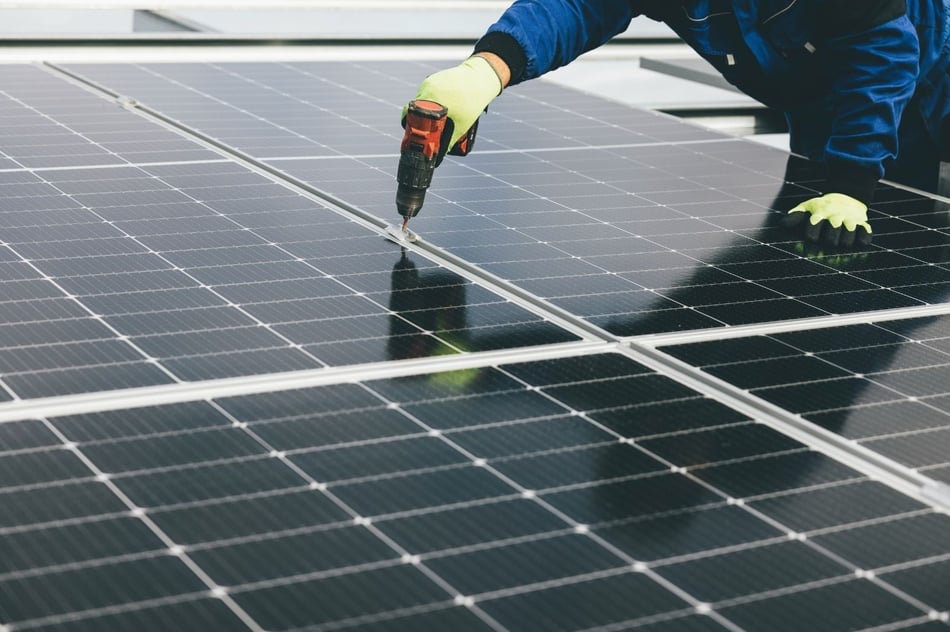
The biggest barrier to solar adoption isn’t the technology itself but the process of getting systems approved and connected. GreenLancer addresses this challenge with an on-demand platform that provides engineering, design, and permitting support for solar and EV charging projects, helping contractors navigate complex, jurisdiction-specific requirements and accelerate interconnection.
The company also tackles one of residential solar’s most overlooked issues: orphaned systems, which are the installations left incomplete when contractors go out of business. GreenLancer steps in to diagnose, repair, and complete these systems, bringing them online and restoring value for homeowners and financiers. Since 2013, it has supported more than 200,000 projects across all 50 states, demonstrating a scalable, infrastructure-focused approach to unlocking clean energy adoption.

LuxWall
Location: Detroit, MI
LuxWall is redefining the building envelope with Transparent Insulation, closing a critical performance gap where buildings have insulated walls and uninsulated windows. Scienced with vacuum insulation technology, Transparent Insulation by LuxWall delivers wall-level thermal performance (R-18), significantly reducing heat transfer and lowering HVAC energy use by up to 50% when compared to conventional double-pane windows (R-3). The result is enhanced occupant comfort, lower energy use, and a fundamentally better-performing building envelope, forever changing the way buildings are designed and constructed.

Remora
Location: Livonia, MI
Remora brings carbon capture directly to the source. Its system attaches to heavy-duty trucks, capturing CO₂ from tailpipe exhaust before it enters the atmosphere. Remora’s proprietary adsorbent technology is designed to perform in humid, real-world exhaust conditions where traditional materials fail. Unlike conventional carbon capture solvents—which can be corrosive, volatile, and costly to maintain—Remora’s approach is more durable and safer to operate at scale. Founded in 2020 and backed by $117 million in funding, the company is advancing a new pathway for reducing emissions in the transportation sector by bringing carbon capture directly to the source.

Michelman
Location: Cincinnati, OH
Michelman develops environmentally friendly advanced materials used in coatings, packaging, and composites, helping manufacturers lower environmental impact while maintaining performance. Its water-based, low-VOC additives and polymeric binders are designed to replace more harmful chemistries, improve recyclability, and extend product lifecycles. Across its operations, Michelman has reduced carbon emissions by 38% while transitioning to renewable energy, demonstrating how material innovation and manufacturing improvements can work together to drive lower-carbon production at scale.
Energy CX
Location: Chicago. IL
Managing energy has become increasingly complex for businesses navigating volatile markets and evolving sustainability expectations. Energy CX is rethinking the energy management process with a data-driven platform that helps organizations treat energy like an investment rather than a fixed expense. By combining proprietary analytics with market expertise, the company enables customers to make more informed purchasing decisions, reduce risk, and optimize long-term energy spend. The company supports a broader shift toward cleaner energy by helping organizations implement sustainability strategies, from renewable energy purchasing and carbon offsets to EV charging and on-site solar. With more than 100,000 service locations and an average of 20% savings for customers, Energy CX is demonstrating how better data, transparency, and execution can drive both cost efficiency and lower-impact energy use at scale.
75F
Location: Bloomington, MN
75F is an IoT building management platform that combines hardware, software, and machine learning to optimize HVAC performance to reduce energy consumption in commercial buildings. Backed by institutional investors and deployed across commercial portfolios globally, 75F has demonstrated measurable energy savings for building operators. Deployments of its devices and connected software can reduce building energy consumption by 20–30%, translating into significant emissions reductions across large commercial portfolios.
Encamp
Location: Indianapolis, IN
Staying compliant with environmental regulations is a growing operational burden for large organizations. Encamp modernizes environmental compliance with a software platform that automates reporting, tracks regulatory requirements, and centralizes data across facilities. By replacing spreadsheets and fragmented workflows with a system of record, the company helps organizations reduce risk, improve accuracy, and ensure timely reporting. Beyond compliance, Encamp enables better environmental decision-making by giving companies clearer visibility into their data, supporting more proactive management of emissions, waste, and environmental impact.

Sortera Technologies
Location: Markle, IN
Extracting critical minerals from low-grade and complex sources has historically been inefficient and resource-intensive. Sortera Technologies is working to change that by enabling the recovery and reuse of metals from end-of-life products, helping close the loop on material supply. The company combines advanced imaging, machine learning, and real-time decisioning to divert billions of pounds of material from being exported overseas while reducing the energy required for aluminum production by up to 95% compared to virgin manufacturing. In late 2025, the company raised $45 million to accelerate its growth as a domestic supplier of upcycled metals, helping strengthen more resilient and lower-carbon supply chains.

RoadRunner
Location: Pittsburgh, PA
RoadRunner is addressing the fragmented and inefficient experience of waste management to help businesses control costs, track environmental impact, and move toward zero waste. The company’s technology-enabled platform connects businesses to a nationwide network of independent haulers, streamlining operations and improving visibility into waste and recycling performance. Using data to optimize routing, reduce unnecessary pickups, and increase diversion from landfills, RoadRunner helps customers lower costs while improving sustainability outcomes. With a focus on efficiency, circularity, and measurable impact, the company is modernizing waste management infrastructure, turning what has traditionally been a back-office function into a more strategic, data-driven part of operations.

AMP Robotics
Location: Denver, CO
Sorting waste at scale has long been one of the biggest bottlenecks in recycling. AMP Robotics’ AI-powered systems identify, recover, and process valuable materials from complex waste streams by combining computer vision, machine learning, and robotics. The company designs and operates advanced facilities that increase recycling rates, reduce labor costs, and make material recovery more economically viable. Its technology has identified more than 200 billion items and processed millions of tons of recyclables, helping divert waste from landfills while producing higher-quality recycled materials for the supply chain.
Optera
Location: Boulder, CO
Optera helps enterprises measure, manage, and reduce their carbon emissions across complex operations and supply chains. With emissions tracking, scenario modeling, and decarbonization planning, businesses can turn climate commitments into actionable strategies.
Founded in 2006 as a boutique corporate sustainability consulting firm called Point380, Optera grew out of a recognition that consulting alone would not be enough—a meaningful product was needed to enable global decarbonization. Optera’s software launched in 2018 to quantify Scope 1, 2, and 3 emissions and identify the most effective pathways to cut them. Adopted by leading organizations like Cisco, Dell, and Williams Sonoma, Optera’s platform has enabled companies to identify and reduce emissions across millions of metric tons of CO₂e, particularly within hard-to-measure Scope 3 supply chains.
Cloverly
Location: Atlanta, GA
Cloverly builds infrastructure for carbon offset transactions, making it easier for businesses to integrate carbon neutrality into their products and operations. Through APIs and integrations, Cloverly enables companies to compensate for emissions in real time, scaling access to high-quality carbon credits. The company has raised venture backing (including participation from Techstars and other investors) and built partnerships across fintech, e-commerce, and logistics platforms.
Rubicon
Location: Atlanta, GA
Rubicon brings greater transparency and efficiency to the waste and recycling industry through a combination of software, data, and nationwide service delivery. Serving more than 100,000 locations—from large enterprises to local businesses—the company helps customers manage waste more effectively, reduce costs, and make more sustainable operational decisions.
At the core of Rubicon’s approach is its technology platform, which uses machine learning, computer vision, AI, and IoT to provide real-time visibility into waste streams, diversion rates, and operational performance. Combined with a network of more than 8,000 hauler and vendor partners, Rubicon supports a wide range of services—including recycling, organics, e-waste, and construction debris—while helping organizations move toward zero-waste goals. With dozens of patents and a growing global footprint, Rubicon is scaling a more data-driven, circular approach to waste management.
Tradewater
Location: Chicago, IL
Tradewater is finding and permanently eliminating some of the most potent greenhouse gases on the planet. The company works on the ground to collect and destroy legacy refrigerants and plug leaking methane wells, preventing emissions before they ever reach the atmosphere. Its work targets non-CO₂ “super pollutants” like halocarbons and methane, which can be dozens to thousands of times more powerful than carbon dioxide. To date, Tradewater has eliminated more than 10 million metric tons of CO₂e. Funded through high-integrity carbon credits, Tradewater’s model channels climate finance into measurable, near-term impact.

.jpg?width=1200&height=500&name=LeanTaaS_IMG_7546_Shared%20May%202026%20(2).jpg)

.png?width=50&name=Erin%20Gregory%20(1).png)