
.png?width=50&name=Erin%20Gregory%20(1).png)
On the first floor of Domino's Farms, the office complex north of Ann Arbor, sits a quantum computing lab. Out back, there's a herd of bison. Idalia Friedson, a co-founder of Sygaldry Technologies, smiles when she describes the setup. Her company is building some of the most advanced computing hardware in the country from its Ann Arbor headquarters and its second office in San Francisco.
In April 2026, Sygaldry announced it had raised $139 million to build quantum-powered AI servers: a $105 million Series A led by Breakthrough Energy Ventures, on top of a $34 million seed round led by Initialized Capital. Michigan has spent the past few years making a case for itself as a serious place to do AI work, so this fundraise is a sign of progress. A growing group of companies and researchers here are working at the intersection of quantum computing and AI.
Why quantum and AI are coming together
Friedson has worked in and around quantum computing for about a decade. The technology uses the rules of physics at the atomic scale to solve problems ordinary computers can't. She started in technology and national security policy at a Washington, D.C think tank, where she helped launch the world’s first quantum policy center, then moved into the tech industry as a product manager before joining Chad Rigetti's first company, Rigetti Computing, where she helped take the business public. Rigetti, who founded and led that company before leaving in 2022, is now Sygaldry's CEO and one of its three co-founders, along with Friedson and AI scientist Michael Keiser.
What drew Friedson to quantum computing is what it can do that nothing else can. "When I learned about quantum computing, I thought this is almost unbelievable, the type of impact it could potentially make," she said. Quantum machines can take on problems that ordinary computers cannot practically solve. Some would take "more than the lifetime of the universe to solve on the current computers that we have," she said.
Sygaldry is aiming that capability at one problem in particular: the cost and energy of running AI. Training and operating large AI models takes enormous amounts of power, and the strain on data centers and the electric grid has become one of the industry's biggest limits on growth. Sygaldry's servers are designed to work as a co-processor inside the data center, running next to the classical GPUs that AI companies already use. The goal, Friedson said, is to get more computing out of each watt of energy going in. "We want to make AI more affordable, more sustainable than it otherwise would be without quantum computing," she said.
The company building the bridge in Ann Arbor
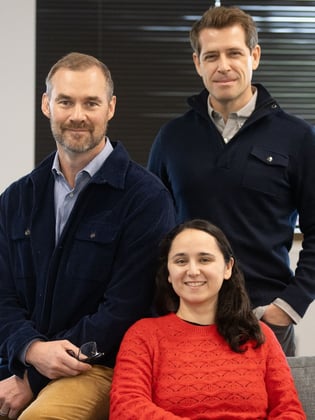 Sygaldry describes itself as focused entirely on one question: how to use quantum computing to make AI better. "We're arguably the only company that's 100% focused on how you can improve AI with quantum," Friedson said. She sees Sygaldry as a bridge between these two communities that have been growing in the region somewhat separately.
On the AI side, the University of Michigan is a national leader in AI research. In 2025, the Brookings Institution named Ann Arbor one of 28 "Star Hubs" in its report on AI readiness, and a group it described as the country's second engine of AI development. The university and the Los Alamos National Laboratory in New Mexico are also developing a high-performance computing and AI research facility in Washtenaw County, part of a partnership the two institutions announced in late 2024.
Neither Rydberg Technologies nor MONSTR Sense Technologies builds quantum computing for AI the way Sygaldry does, but both show the region already has meaningful work underway in quantum technology and advanced measurement, alongside the university's own quantum research institute. Rydberg Technologies, founded in Ann Arbor in 2015, builds quantum sensors that measure radio-frequency signals with a precision ordinary antennas cannot reach, and has demonstrated long-range radio communication using an atomic sensor at a U.S. Army testing event. MONSTR Sense Technologies, a University of Michigan spinout, makes ultrafast imaging instruments that researchers and semiconductor manufacturers use to analyze materials and find defects on silicon wafers.
Friedson's point is that these two threads, AI and quantum, are stronger together, and that a company working on both at once can help connect them.

Building a company with Michigan roots
Michigan's universities produce strong engineers and scientists. Keeping them here is the harder problem, and it's the one Friedson returns to most. Building a deep-tech company takes more than good science. It takes turning research into a business that can grow and wants to stay in the state, which means holding onto the people who can build it.
That is where she credits Ann Arbor SPARK. "They've just been an amazing resource from day one," Friedson said. SPARK has helped Sygaldry recruit and promote open roles, and it has worked with employees the company relocated to Ann Arbor to get them settled, including connecting their spouses and partners to job opportunities. SPARK has supported Sygaldry since its move to Ann Arbor, assisting with talent recruitment and industry connections.
Quantum and AI talent tends to concentrate in a few expensive cities. Building in Ann Arbor, Friedson said, lets the company work on frontier technology while offering employees a quality of life and a cost of living that those cities cannot match. Keeping the San Francisco office gives Sygaldry a foot in both worlds.
What Michigan could become
Friedson thinks the state has a specific opening. "There's an opportunity for Michigan to put itself on the map as the leader at the intersection of quantum and AI," she said. Getting there, in her view, takes continued investment in talent and in the infrastructure to support it, along with policies that back quantum and AI work. It also takes organizations like SPARK that make it easier for startups to form and grow.
For now, Sygaldry is hiring. The $139 million is going toward building out its quantum and AI teams across Ann Arbor and San Francisco, with open roles in quantum engineering, AI research, go-to-market, and product.
Friedson believes AI and quantum will shape the next era of computing together, and she wants Michigan to be where that combination gets built. Sygaldry's raise is the strongest evidence so far for that argument. Whether more companies and investment follow will show whether it holds up.



%20(1).jpg?width=1200&height=500&name=techtown-mental%20health%20(1)%20(1).jpg)