
.png?width=50&name=Erin%20Gregory%20(1).png)
Women founded 49% of all new businesses in 2024 — a 69% increase from 2019. Yet female founders still receive just 2% of venture capital funding, and women-led startups continue to face barriers in networks, credibility, and access that their male counterparts rarely encounter. We're highlighting these stories to show what's possible when you don't give up. When you ignore the glass ceiling. When you build a solution to a problem nobody can ignore.
When women see other women building companies, navigating funding rounds, and leading in industries that have historically excluded them, the ceiling shifts. Role models matter. Representation changes who believes they belong in the room.
In celebration of Women's History Month, Purpose Jobs and Ann Arbor SPARK are spotlighting four female founders building companies that tackle mobility access for aging adults, healthcare infrastructure, housing technology, and fertility care.
 Meera & Praveena Ramaswami, Cargility
"Meera makes it. Praveena makes it move."
That's how the Ramaswami co-founders describe their dynamic. Meera, the engineer, leading product development and inventor. Praveena, is the CEO and handles business development. Together, they're building Cargility, which makes a portable assisted device to help aging adults or anyone with stability challenges get in and out of cars safely.
The idea came when Meera watched her grandmother fall while stepping out of the family car. The injury healed. The fear didn't. Her grandmother stopped wanting to leave the house. Meera learned that this is what millions of aging adults face: getting in and out of a car becomes one of the most vulnerable moments of the day, where a brief loss of balance can cascade into injury, isolation, and loss of independence.
In 2022, she invented a solution she started designing. Testing. Iterating then patented her portable assistive device. "It took three years of validation and development," Praveena explains. Meera was testing the technology. Praveena was evaluating whether Michigan's mobility ecosystem could support what they wanted to build then decided to turn the idea into a business in 2025. The mother daughter duo decided to become co-founders, Praveena left her career to focus fulltime on Cargility as a business and Meera continued to develop the solution.
Many wonder how the dynamics work as a unique pairing of co-founders, "We did the foundational work long before the company existed," Praveena says. "We spent years understanding how each other thinks, communicates, and handles pressure. That history is our operational leverage."
They became clients of Ann Arbor SPARK's and joined their Entrepreneur Boot Camp as a registered company wanted to pressure-test their business assumptions. The program forced them to slow down: Why this? For whom? Are you certain?
Customer discovery reshaped how they thought about Cargility. Their purpose and market got sharper.
Their advice to other women thinking of starting a company? "Us women havebeen figuring it out your whole life," Praveena says. "Follow your own yellow brick road.Just start because you've had the power all along." Today, Cargility is operating in stealth mode as they prepare to bring the device to market later this year.
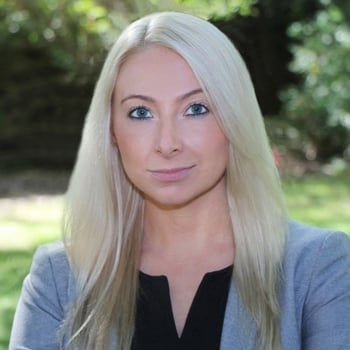 Lindsay A. Joseph, BedConnect
Lindsay Joseph didn't have one "aha" moment. As a hospital CFO and healthcare operator, she had the same frustrating realization over and over: smart clinicians spending hours chasing post-acute beds, updating spreadsheets, apologizing for delays they didn't create.
The problem was systemic. Hospital discharge — one of the most critical transitions in healthcare — still runs on phone calls, faxes, and manual tracking. Clinicians burn out trying to navigate it. Patients sit in hospital beds longer than necessary while everyone searches for an available placement. The system accepts this as normal.
"The truth is, there isn't one specific bad actor responsible for the way the process works today," Lindsay explains. "It's the natural outcome of how our healthcare systems evolved."
Lindsay and her co-founders weren't entering as outsiders. Between them, they bring more than 100 years of combined healthcare experience across operations, finance, and care coordination. But they didn't assume they had all the answers.
Before writing any code, they shadowed case managers, social workers, and discharge planners. They watched them work. Asked what slowed them down, what frustrated them, and where the workarounds were. They wanted to understand the gap between how the process should work and how it actually works — because that's where software usually fails.
"We know this space deeply," Lindsay says, "but that doesn't make us experts on every workflow in every hospital or post-acute provider," she says.
That became BedConnect, a platform built with clinicians, not for them. It provides real-time visibility into post-acute bed availability, letting hospitals match patients based on care level and insurance coverage while tracking the entire placement process — no electronic health record (EHR) integration required. It helps hospitals and post-acute providers coordinate placements while giving patients the information they need.
And they didn't stop there. Lindsay and her team continue to round with discharge teams in hospitals and admissions teams in post-acute facilities, staying close to the people doing the work.
The Michigan start-up ecosystem has been extremely supportive of Lindsay and her vision to transform patient transitions. Ann Arbor SPARK provided mentors and advisors who understood building in healthcare, where the sales cycle is long and credibility is earned slowly. It also connected Lindsay to a network of fellow founders, and she co-founded FoundHers: MedTech Entrepreneur Circle, a curated group of women opening doors for each other through the unique challenges of healthcare startups.
"There's something powerful about building in a community that values substance over hype," Lindsay says. "You don't need to wait until you feel ready. Confidence doesn't arrive first, action does. And don't underestimate how much resistance you'll face simply by existing in the room. Learn to separate feedback that sharpens you from noise that's meant to shrink you."
.jpg?width=285&height=350&name=Andrea%20Taylor_Livesee_SPARK%20Women%20Founders%20Article%20(1).jpg) Andrea M. Taylor, Livsee
Andrea M. Taylor, Livsee
Andrea Taylor has a rare perspective in the multifamily housing industry: she's worked both sides. As an operator at Morgan Properties, Waterton, and Village Green, she saw the frustration firsthand. As an in-house innovator at companies like ActiveBuilding and Yield, she built technology meant to fix it. Nearly two decades of watching the same problems persist — outdated lead management, opaque pricing, renters who couldn't get straight answers — convinced her the industry needed a different approach.
Livsee is her answer: an AI-powered platform that uses real-time data and transparent pricing to help property operators convert more leads while helping renters find better homes.
In March 2025, Livsee closed an oversubscribed pre-seed round backed exclusively by Midwest venture firms. "As a Michigan State University graduate, with a business located in Ann Arbor, I couldn't be more thrilled that our initial backing is from exclusively Midwest venture firms," Andrea said. "This funding isn't just a milestone. It's proof that the Midwest is ready to bet on big ideas."
Andrea first connected with Ann Arbor SPARK by attending the a2Tech360 event series as a guest of another founder. She was inspired by the region's tech ecosystem and the support network available to startups, and decided to relocate Livsee to Ann Arbor.
SPARK's Startup Acceleration program became essential to building the foundation. The program connected Andrea with an Entrepreneur-in-Residence for marketing services, awarded Business Accelerator funds for a promotional video, invested through SPARK Capital, and enrolled her in the CEO Master Class. "Their belief in our vision and commitment to connecting us to the resources we needed were critical to building a strong foundation and reaching this point in our journey," Andrea said.
The funding is accelerating product development. After nearly nine months in beta, Livsee is building on those insights — expanding data analysis capabilities to offer revenue intelligence based on chatbot data, securing key integrations, and investing in cybersecurity.
Her advice? "Do it. Trust yourself. People will constantly question you, but don't let that become the story you tell yourself."
 Jessica Preston, Denovo Functional Wellness
Jessica Preston didn't set out to build multiple companies. She set out to build a better way to approach health. Denovo began with a focused mission: helping couples achieve pregnancy through a functional medicine approach to fertility. The program quickly gained traction, with the company reporting natural conception success rates exceeding 80%.
But as Denovo grew, Jessica noticed something important. Clients weren't just interested in pregnancy – they were asking about perimenopause, autoimmune conditions, hormones, and longevity. Those questions reflected something Jessica had recognized from the beginning: fertility is rarely an isolated issue. It's often one of the earliest signals that deeper biological systems are losing balance.
"From the start, we viewed fertility through a systems biology lens," Jessica explains. "The same biological systems that support reproduction — cellular health, hormones, metabolism, inflammation — are the same systems that determine long-term health."
That perspective shaped the natural evolution of the company. Today, Denovo Functional Wellness operates across the full spectrum of functional health, supporting individuals through reproductive health, hormonal transitions, metabolic health, autoimmune conditions, chronic fatigue, mental health, and longevity.
A foundational principle in Denovo’s work is nervous system safety: the principle that the body can't heal until it feels safe. "When the nervous system feels safe, hormones regulate, inflammation decreases, and the body shifts back into repair and resilience," Jessica says.
Denovo began as a tech-enabled health platform that integrated diagnostics, biological data, clinical insight, and guided wellness programs based on root-cause systems biology. This foundation allowed it to expand beyond fertility into a comprehensive functional wellness model, now addressing hormonal health, metabolic disease, autoimmune conditions, and chronic disease to optimize lifespan and healthspan.
The platform operates across direct-to-consumer (B2C) and partner-driven (B2B2C) channels, leveraging partnerships with healthcare systems, employers, and other organizations, which is key to scaling. Rather than building isolated wellness programs, Jessica has focused on building a scalable health infrastructure—one designed to translate systems biology into practical tools that individuals and organizations can use to improve health outcomes.
Her entrepreneurial journey has been supported in part by Michigan’s startup ecosystem. Programs including Ann Arbor SPARK’s Entrepreneur Boot Camp, Biotech Innovation, and FastTrack programs helped her refine Denovo’s strategy and connect with leaders in health innovation. One introduction through SPARK led to a medtech event that ultimately opened the door to the Conquer Accelerator Program through Henry Ford Health Innovations and MSU Research Foundation.
Her advice: "Patience. You'll never regret taking the leap, but go in with your eyes open. It often takes three to five years to gain real traction. Have a financial bridge, but be intentional with your time — that bridge can easily become a distraction."
Looking ahead, Jessica sees healthcare shifting from reactive treatment to proactive optimization. "The future of health isn't just about managing disease. It's about understanding the biological systems that create health in the first place," she says. "We're only beginning to see what's possible when health technology is designed to support the whole human system."
The Common Thread
What unites these founders isn't industry or background. It's refusing to accept broken systems and having the discipline to build something better.
But discipline alone doesn't get you there. You need structure when you're pressure-testing assumptions. You need connections when you hit a wall. You need people who've done it before to tell you what actually matters.
That's where Ann Arbor SPARK shows up. Since 2006, SPARK has graduated 68+ startups and hosted hundreds of events annually. Not through platitudes, through tactical support, strategic introductions, and a community that understands the long game.
These four women built companies, raised funding, and are solving real problems. That doesn't happen by accident.

.jpg?width=1200&height=500&name=LeanTaaS_IMG_7546_Shared%20May%202026%20(2).jpg)